
Let's talk about nuclear weapons
Shattering illusions, MAD equilibrium, Greenland & neutralising sub-MAD risks

Russia-Ukraine war destroyed nuclear illusions
In 2022, following the Russian invasion of Ukraine and subsequent NATO/ROW acquiescence to the violation of UN founding principle of sovereign integrity, I wrote that nuclear non-proliferation (NNP) was dead. Following this initial rupture of illusion on UN/NATO commitment to member/partner sovereignty, came frightening Russian efforts to reduce Nuclear first-use taboo. A sign that not only was NNP dead, but that the dark days of Cold War mutually assured destruction (MAD) logic were set to be revisited and stress-tested again.
Nuclear war calculus has a habit of paralysing national leaders and halting necessary decisions impacted by its tremendous foreboding. This clearly played a role in Europe/US decision-making stutters during early months of the Russian invasion, and it clearly continues to influence NATO/Europe’s strategic hesitancy amid peace negotiations.
Just as they did in 1950s, the existence of Russian thermonuclear, hypersonic ICBM stockpiles that can destroy the world many times over tends to render other security dilemmas inconsequential until the elephant in the room is addressed. This is where the world finds itself again in the 2020s.
Russia stole Crimea from Ukraine in 2014, it orchestrated a separatist movement in the Donbass, and then it launched a full-scale invasion in 2022. It violated the very agreement used in 1994 (Budapest Memorandum) to convince Ukraine to give up its Soviet-era nuclear arsenal in exchange for external security assurances. Assurances, underwritten by three nuclear powers (Russia, US, & UK), ie, resting on the immutable logic of nuclear MAD. For this reason I wrote in March 2022 that NNP was dead. The world’s nuclear powers’ assurances meant nothing to Ukraine.
Then, soon after, the next illusion to be broken was the ‘immutable’ logic of MAD itself. Putin (and other Russian leaders) regularly discussing the logic of, and threatening to use low-yield theatre nuclear weapons altered the trigger events essential to maintaining Nash Equilibrium. It was no longer a case of managing only the classic risks of non-rational actor & accidental use, but now the risk of NUTS (nuclear utilisation target selection) had become real.
Equally relevant to post-Ukraine nuclear security dilemmas was Russia’s revised Basic Principles of State Policy on Nuclear Deterrence, updated in 2024 (Putin). NUTS was now part of Russia’s notorious ‘escalate to de-escalate’ doctrine, along with other impossible amendments to accept (below).
Conflict Termination (Escalate-to-Deescalate): The doctrine explicitly states that nuclear deterrence aims to prevent the escalation of hostilities and to stop them on “conditions acceptable for the Russian Federation”. This reflects a NUTS dimension by treating nuclear use as a functional military option to end a conventional war in Russia’s favour.
Lowered Threshold for Conventional Threats: The requirement for nuclear response was changed from a threat to the “very existence of the state” to a “critical threat to sovereignty and/or territorial integrity”. This provides a more permissive, tactical opening for first use against non-existential threats.
“Joint Attack” Clause: The wording now classifies aggression by a non-nuclear state (e.g., Ukraine) supported by a nuclear power (e.g., the U.S.) as a “joint attack,” allowing for a nuclear response against either party.
Response to “Massive Launch”: Russia now reserves the right to use nuclear weapons upon “reliable information” of a massive launch of conventional air and space attack means (cruise missiles, drones, or aircraft) crossing its border.
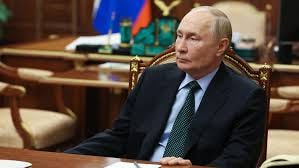
This revised military posture also extended Russia’s nuclear umbrella to Belarus, which by itself did not alter doctrine, but by following this up with deployment of ICBMs in Belarus in December 2025, it changed the status quo.
These factors, and several others have necessitated the aggressive Greenland deployment strategy now pushed by Washington, but we’ll get to that later. For the moment, let’s continue on the topic of nuclear precedent erosion.
Risks to deterrence
The desire for individual States to possess a defensive nuclear arsenal is difficult to refute. In particular, for countries/regimes geographically positioned where external threats perpetually exist.
The little success UNSC proponents have had in persuading countries to adhere to NNP treaty objectives was achieved by offering economic incentives and/or the benefit of an existing nuclear powers’ security umbrella. The problem is/was that if the external threat is existential, and the nuclear power umbrella is viewed skeptically, then these incentives fail to compel.
It is difficult to argue that North Korea and Pakistan are not better off with their nuclear arsenals. It is difficult to argue that nuclear opacity does not underpin Israel’s defence posture. Threshold countries like Japan and Iran clearly create regional insecurity for some of their neighbours. This phenomenon is undeniable, and its calculus painfully realpolitik.
Acknowledging that economic incentives really only work for small or poor countries that can’t really afford to build/maintain a credible nuclear deterrent, inevitably places all weight on the nuclear superpower deterrence component. Therefore, loss of superpower nuclear deterrence credibility is the definitive change to status quo.
This is the painful essence of the fear surrounding current US isolationist instincts. Even incremental isolationist gestures immediately call the nuclear deterrent into question. Putin was quick to exploit this known vulnerability once his conventional weapon-based Ukraine invasion stalled, and now we are stuck addressing this society-defining issue once again, until the genie can be put back in the bottle.
The umbrella is leaking
Before we get to discussing US strategy under Trump that addresses this ultimate security dilemma, let’s review what those caught in the middle have done. Firstly, the reaction from the Scandinavians has been interesting.
Jeppe Kofod, a former Danish Foreign Minister & ex-Deputy Sec Gen NATO, in May 2025, called for the creation of a Nordic Defence Union with its own nuclear weapons. Johannes Kibsgaard, researcher at NDUC, Norway’s equivalent of West Point, wrote an incredibly well-reasoned paper last month calling for a Nordic Nuke. A program to be embedded in both NATO and European collective defence structures. Poland’s leaders have repeated offered to join the NATO nuclear sharing program (IISS).
Other threshold countries like Japan (here), South Korea (here), Australia (here), have also begun the intractable debate, all countries that I listed back in 2022. The reaction function was predictable. If you have the financial strength & the technological sophistication, and you currently operate under a US or European nuclear deterrent, you are compelled to review your options at times like this.
The deterrent gap that needs to be closed is that which was opened by Russia’s Basic Principle amendments. The unique nature of these amendments can be seen as a nuclear extension of the hybrid warfare theme in-train since Putin called an end to EU/NATO collaboration following 2008 NATO Bucharest Summit.
What had previously been a non-war, hybrid warfare strategy: military incursions to create territorial disputes (Georgia, Ukraine, Moldova), thereby blocking NATO ascension, cyber warfare, political interference, assassinating dissidents on foreign soil, etc., eventually became a hybrid nuclear doctrine post-Ukraine invasion.
Where previously conventional weapon & alternative warfare methods were based on plausible deniability and below-threshold war declaration, the Basic Principle revisions were aimed at below-MAD threshold domain tactics and punitive threat-based deterrents directed at the escalation ladder.
MAD was like a straight jacket. It greatly restricted conventional conflict escalation toward nuclear. It kept the peace with the primary actors in all global conflicts the Soviets and Americans. Now, we not only have a world where many conflicts might not include either, we also have scenarios where neither may come to the rescue of an ally. That makes Putin’s hybrid nuclear doctrine changes post-2024 live triggers . . . until proven otherwise.
The US response
I’m going to call this the US response rather than Trump response because the US would have been forced into a response regardless of who was in the White House. Trump may be a champion of the Golden Dome within this strategy, viewing it as the easiest decision to embrace from the menu, but the Golden Dome isn’t a one-dimensional strategy. It skews the MAD calculus in various was, much like various second-strike capabilities do, but it isn’t THE strategy.
Ultimately, what the US has to do that no other member of the alliance can do is to alter the MAD calculus in a way that restores definitive balance. And in conjunction with the Europeans, it needs to deploy alternative, non-nuclear weapons that neutralise the Russian use-case threat of theatre nuclear weapons, and to diffuse the Russian regime’s existential fears. These address each one of the Basic Principle amendment triggers.
What is perhaps not appreciated widely enough, is that this total vertical recalibration of the MAD deterrent must be US-created, controlled, deployed, and maintained. That’s the only way it halts Russian escalation strategies. Third country involvement with a straight forward collective defence treaty doesn’t do it. What it actually does is leave slivers of daylight to be exploited via hybrid doctrine.
This is the difference when it is a single country (Russia) VS an alliance of many (NATO). The playing field presents infinite combinations for hybrid warfare on Russia’s side. The bipolar world pre-90s had the de facto clarity of two superpowers squaring off against each other, and this allowed MAD to be the dominant doctrine. Hybrid warfare from the Cold War period rarely flirted with the MAD calculus. In the 2020s, Russia is actively exploiting ever inch of pre-conventional war domain AND NOW, every inch of pre-MAD nuclear domain as well.
Greenland
While the primary focus on Greenland the past 5 years has been Arctic sea lanes opening and US military bases, in 2025-26 the topic was blown wide open with additions like critical minerals, policing the GIUK Gap, and Monroe Doctrine sphere-of-influence claims. Davos provided the stage, Trump provided the thunder, Europe provided the outrage.
However, one never knows how much is actually agreed upon quietly in advance. Trump has been the master of providing political cover for all. His bombastic outbursts suck all of the media attention and public opinion angst away from the other decision makers that may not have the political capital to agree to hard choices directly in front of camera. I won’t risk slipping into this quagmire, because frankly, there is no way I would have access to the truth.
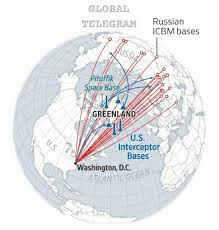
Instead, seen purely from a strategic deterrence framework, Greenland offers the US the perfect opportunity to reset the MAD deterrence calculus, while simultaneously achieving many of the other stated objectives: 1) guard the Northern Gate to the Atlantic, 2) build a safer, back-up space/satellite station to Svalbard, 3) major Golden Dome hub, 4) expand the Monroe Doctrine (to block Russia-China, not Europe), 5) critical mineral operations (primarily to generate income that could be used to sustain military bases). This list is already long enough to encourage NATO to make a deal, but why might NATO grant the US even more autonomy?
This issue of clarity on application, deployment, escalation management - including pre-emptive strike, and maintenance of the MAD+ deterrent is only achieved when 100% ‘owned’ by the players engaged in the MAD standoff. All the exceptions, all the pre-emptive security measures put in place, the emergency hotline protocols, and discretionary risks must be hardcoded and agreed by the two MAD participants. You are building trust where none exists. Three participants (China) change the calculus, but that’s for another paper.
The US needs complete control in Greenland in order to professionally, successfully, safely play this societal-imperative, deterrence role. There can’t be any third party or non-MAD doctrine related intervention sources clouding the circumstances.
Greenland, which falls under Denmark’s parliamentary rule, including the Nuclear-Weapon-Free Zone (NWFZ) doctrine, has historically voted to ban nuclear power (1985), promoted the Arctic as a nuclear free zone (2013), and is only able to tolerate current US nuclear activities on Greenland under the 1951 & 2004 defence Agreements by turning a blind eye.
Historical arrangements authorised military operations of a defensive nature, with any deployment of offensive military architecture or nuclear weapons requiring advanced consultation with Denmark & Greenland. The1968 supplement to the 1951 defence Agreement still strictly prohibits nuclear weapons. It is only now in 2026, after the Davos shocks, that Danish Prime Minister Frederiksen is reportedly willing to discuss ‘nuclear stationing’.
Therefore, not only for US clarity to manoeuvre in a high-stakes MAD stand-off with Russia, but also for Denmark’s own parliamentary consistency, separating these functions - a national NWFZ doctrine & Greenland’s role within NATO/US defence - is a logical path forward.
Neutralising sub-MAD nuclear risks
Even with US freedom to operate expanded in Greenland and US credible nuclear defensive posture re-enforced to the degree that MAD equilibrium is assured, Europe will not feel secure until other Russian nuclear escalation tacks are offset: 1) use of theatre nuclear weapons, 2) lower threshold for nuclear use (State existential threat), 3) “joint attack” clause: right to use nuclear weapons against a non-nuclear State, if it is backed by a nuclear power.
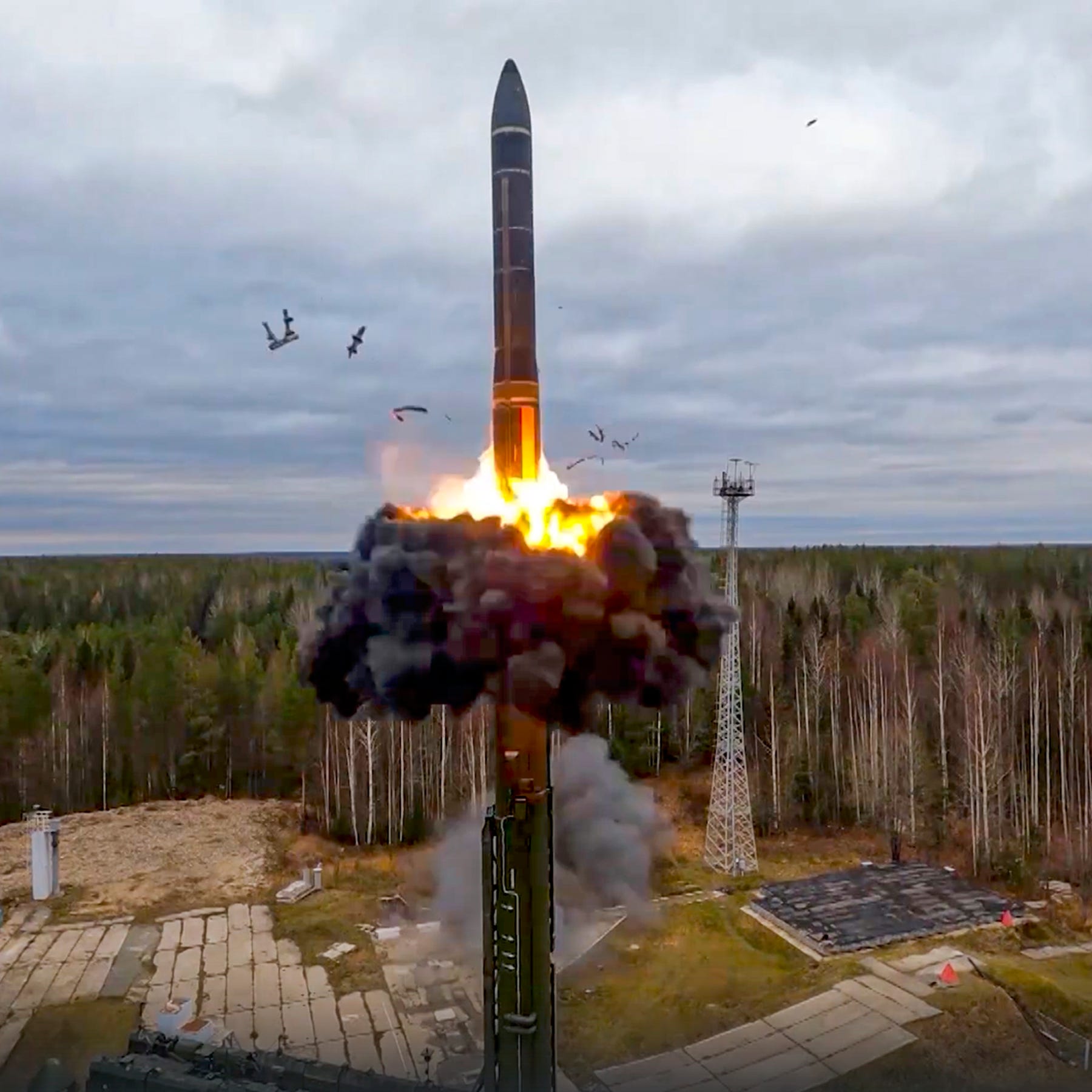
To address the first risk, all conventional military planning must incorporate provisions to work around the circumstances that might invite this type of weapon use. In Johannes Kibsgaard’s excellent paper noted above, Russia firing an Oreshnik missile last month at an aviation repair plant south of Lviv invites this review.
Moscow’s “Oreshnik” strike on January 9, 2026 is best understood as strategic signaling designed to shape what NATO will and will not do. Russia’s use of nuclear-capable delivery systems in the Russo-Ukrainian War underscores a returning logic: nuclear weapons as instruments of coercion and risk manipulation, not only city destruction.
On the second risk, externally-driven regime change can never be a military strategy for the West. For all the shrieking about Putin being a war criminal and how the world can never return to interacting economically with Russia as before, better reflection on how this problem is realistically addressed is necessary. Internal regime change will remain the only option. The path to internal regime change is a totally different game.
And with regard to the third risk, one can more easily understand why Europe has been so reluctant to put troops on the ground in Ukraine without a peace deal in place. This is why I wrote in August last year that the Trump-Putin Summit in Alaska was a watershed, as it purported to have achieved agreement for European troops on the ground. Given the severity of the risks to country implied, few will want to put themselves in this situation even with an invitation. That’s the new reality in dealing with Putin’s Russia.
Over & out
This Global Watchtower report was not intended to be a definitive treatise on nuclear weapons and the MAD doctrine, that’s above my paid grade. I felt compelled to write this because I saw no commentary along these lines since Russia deployed ICBMs in Belarus in December, and fired its new Oreshnik in early January. Everyone was watching Venezuela when they should have been watching Russia.
The fact that Davos was used as a stage to force through the Greenland strategy looked clearly to me as the sense of urgency needed in order to respond to Russia effectively. MAD equilibrium is as much psychological as it is measured hard power.
These old Cold War frameworks remain unfamiliar to most, and frankly are depressing to dredge up. But it must be done. The battle between good & evil never ends.